

Impact
GreenLED —
Safe rainwater reuse for a greener city
How Alphen aan den Rijn is supplying 50,000 m² of green roofs and facades with local rainwater, without using the drinking water supply.
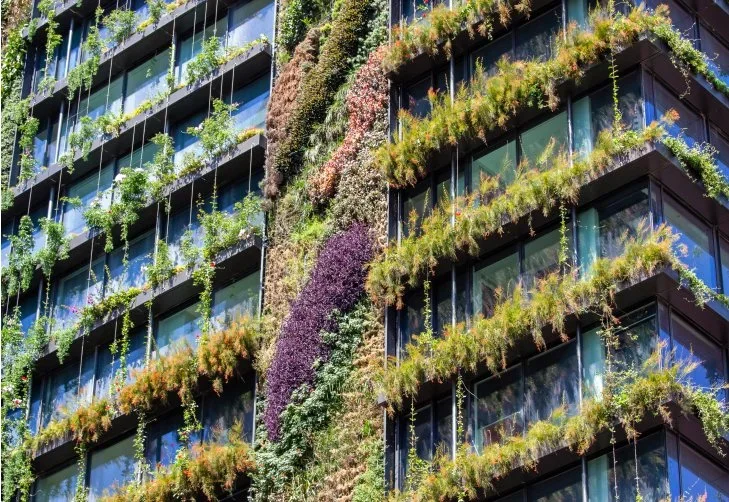
Urban GreenLED application: Irrigation of green roofs and green facades.
GreenLED in Alphen aan den Rijn
🌿 The hidden challenge behind urban greening
Cities are getting greener, but keeping them green is not as simple as planting more trees or adding green roofs.
On hot summer days, these green spaces cool streets and improve urban life. During heavy rain, they help absorb water and reduce flooding. But behind this visible success lies a less obvious challenge: how to keep them alive all year round.
Because in dense cities, there is little space to store water, drinking water is too costly for irrigation, and rainfall doesn’t match demand, falling mostly in winter, while plants need it most in summer.
This is where GreenLED comes in, enabling a locally collected, safe, and sustainable water supply that makes urban greening truly scalable.
This challenge is no longer theoretical. It is becoming very real in cities that are scaling up urban greening.
🌧️ A real-world example in Alphen aan den Rijn
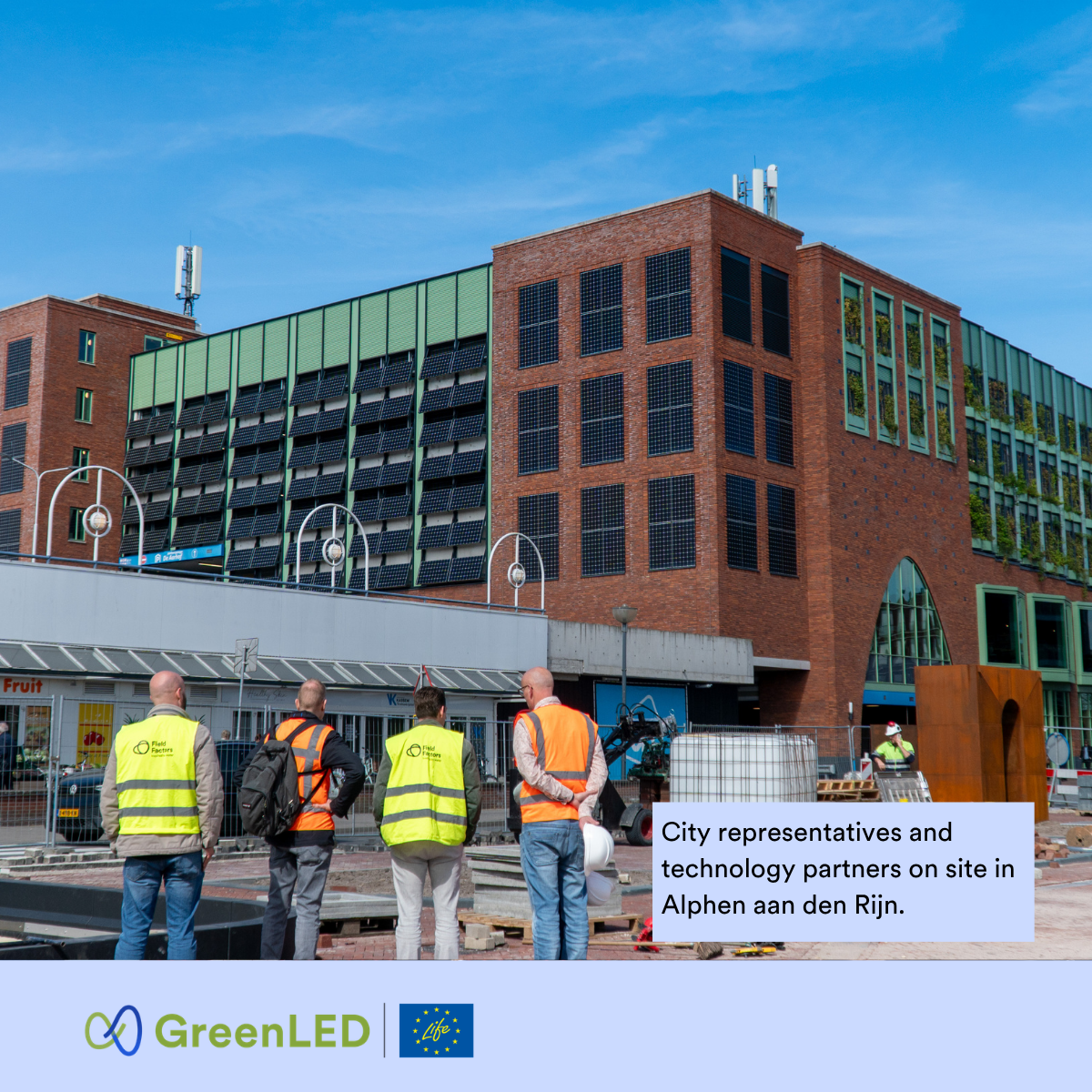
Alphen aan den Rijn is a clear example. The city has set an ambitious goal: transforming more than 50,000 m² of rooftops and building facades into green space. But to keep these spaces alive, it needs something many cities struggle with — a reliable local water supply that does not depend on drinking water.
Together with TU Delft, Aveco de Bondt, and APRIA systems, FieldFactors is implementing a proven combination of natural water treatment, underground storage, and UV-LED disinfection — giving the city a safe, local alternative to drinking water for urban applications.
In simple terms, the system captures rain where it falls, treats it safely, stores it below ground, and makes it available again when the city needs it, especially for irrigation of urban green spaces.
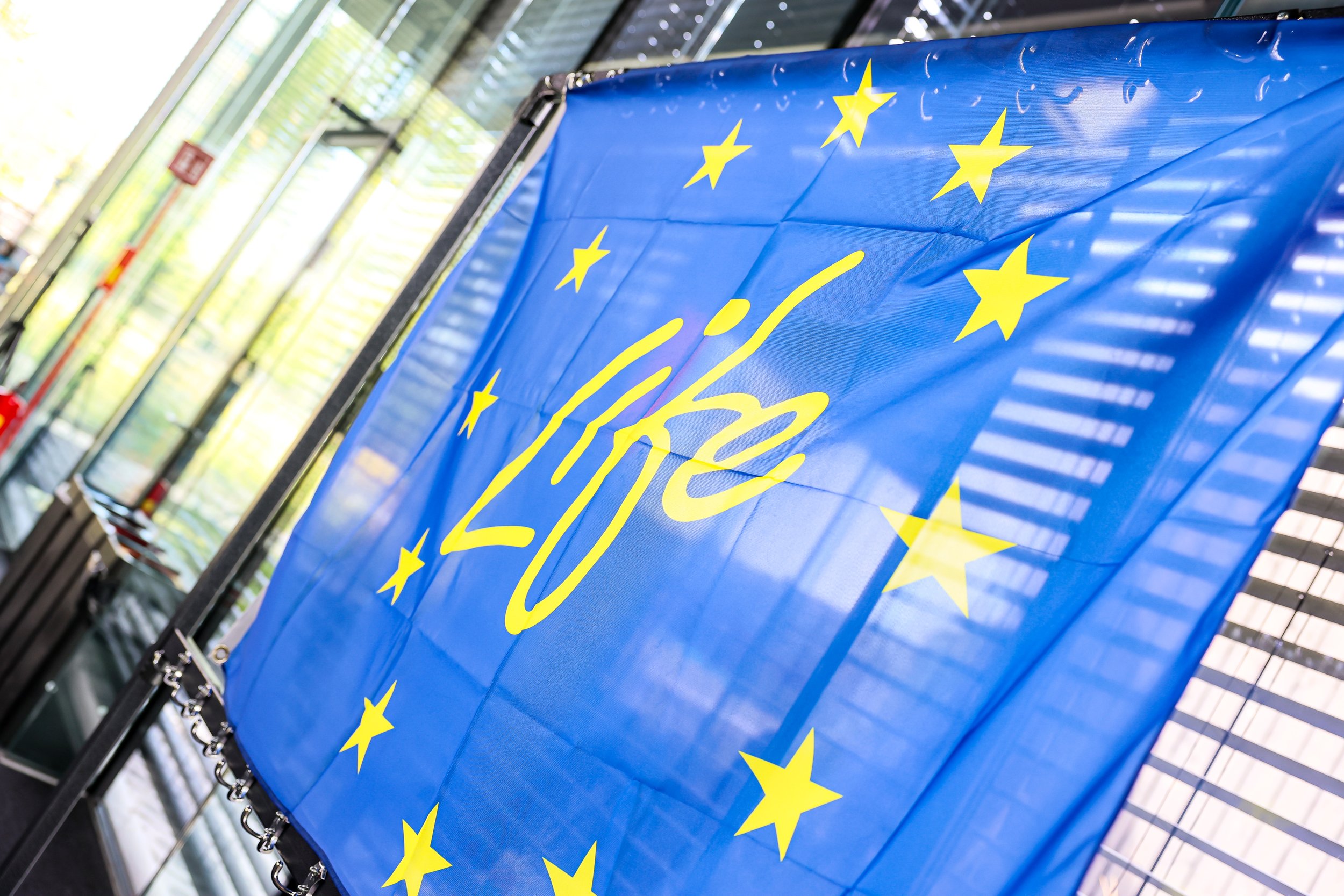
GreenLED is a European project proving that cities can safely replace drinking water with locally collected rainwater at scale. Co-funded by the EU LIFE program, it runs demonstration sites in the Netherlands and Spain. This story focuses on the Dutch site in Alphen aan den Rijn.
-
Alphen aan den Rijn’s own climate stress tests identified the city center as one of its most vulnerable areas, exposed to both heat stress and flooding. The city will install 50,000 m² of green roofs and facades to reduce the urban heat island effect and improve resilience to extreme rainfall.
But green infrastructure needs water: reliably, in summer, and in large volumes. The city faces four hard constraints:
Limited storage space: The city center is dense and fully built up. There is no room for large water tanks or reservoirs above or below ground.
Unsustainable potable water use: Using the drinking water for irrigation is neither sustainable nor cost-effective, and increasingly hard to justify as droughts become more frequent.
Seasonal mismatch: Rainfall in the Netherlands peaks in autumn and winter. The demand for irrigation is in summer. Without seasonal storage, the two never meet.
Safety requirements: Water used on rooftops and facades, where people live and work, must be safe. It needs to meet clear quality standards, even when it is not intended for drinking.
-
FieldFactors, together with the City of Alphen aan den Rijn and project partners TU Delft, Aveco de Bondt, and APRIA Systems, is implementing the GreenLED system at two city-center sites: Lage Zijde and Hoge Zijde. Part of the four-year EU LIFE GreenLED demonstration program, the system is mostly underground, compact, and designed for dense urban areas. It works with the natural water cycle: capturing rain in wet months, storing it underground, and delivering it when irrigation demand is high.
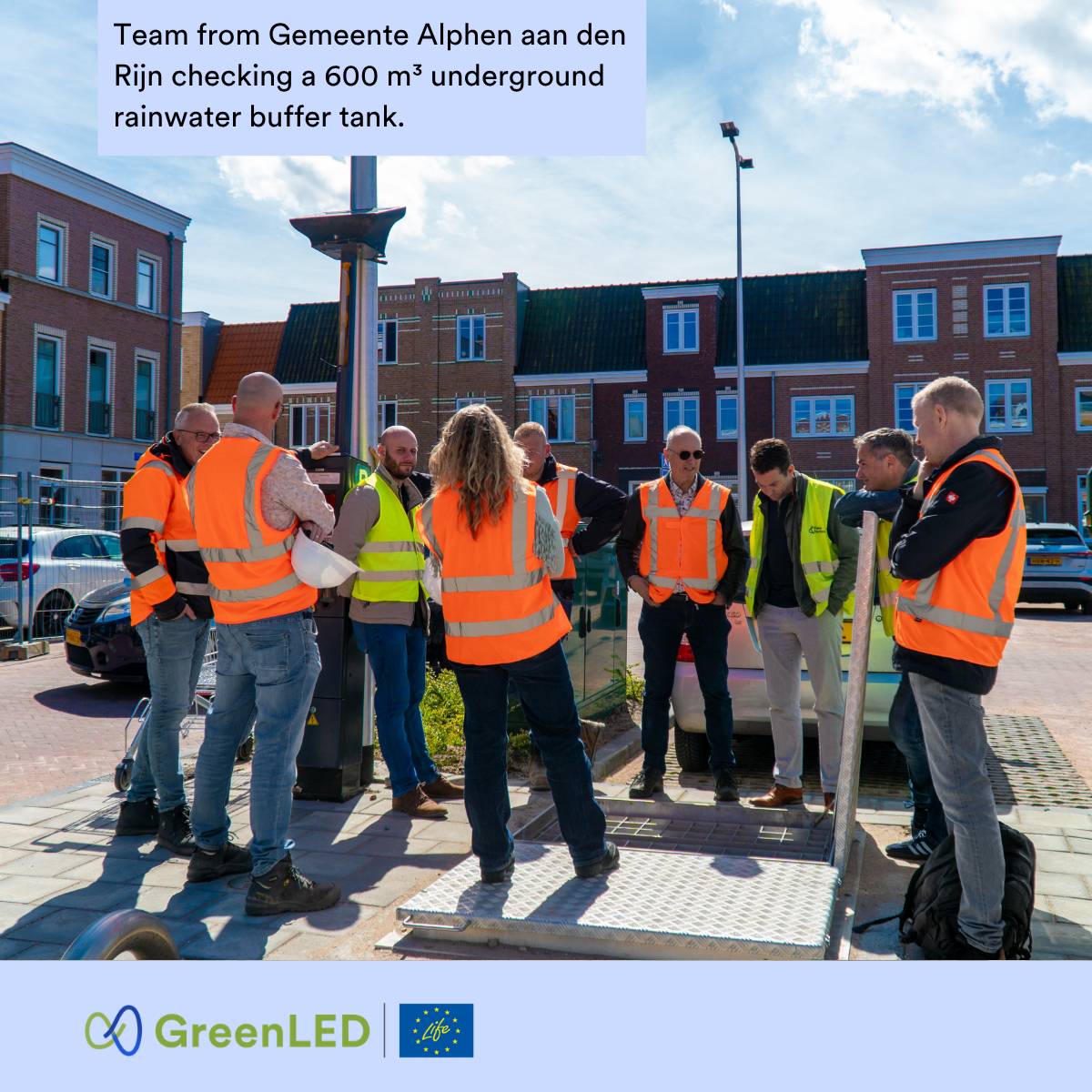
Rainwater capture: In the Lage Zijde, rainwater from streets and paved surfaces is collected before entering the sewer and stored in a retention tank beneath a city parking area. In the Hoge Zijde, rainwater is captured and stored in the canal system. Two water sources, one purpose: bringing rainwater back into use.
Natural filtration: The water passes through a biofilter (a natural treatment system using plants and filter media) to remove contaminants before storage.
Underground storage: To overcome limited space in the dense city center, filtered water is stored in the local aquifer, using the ground itself as a seasonal underground reservoir.
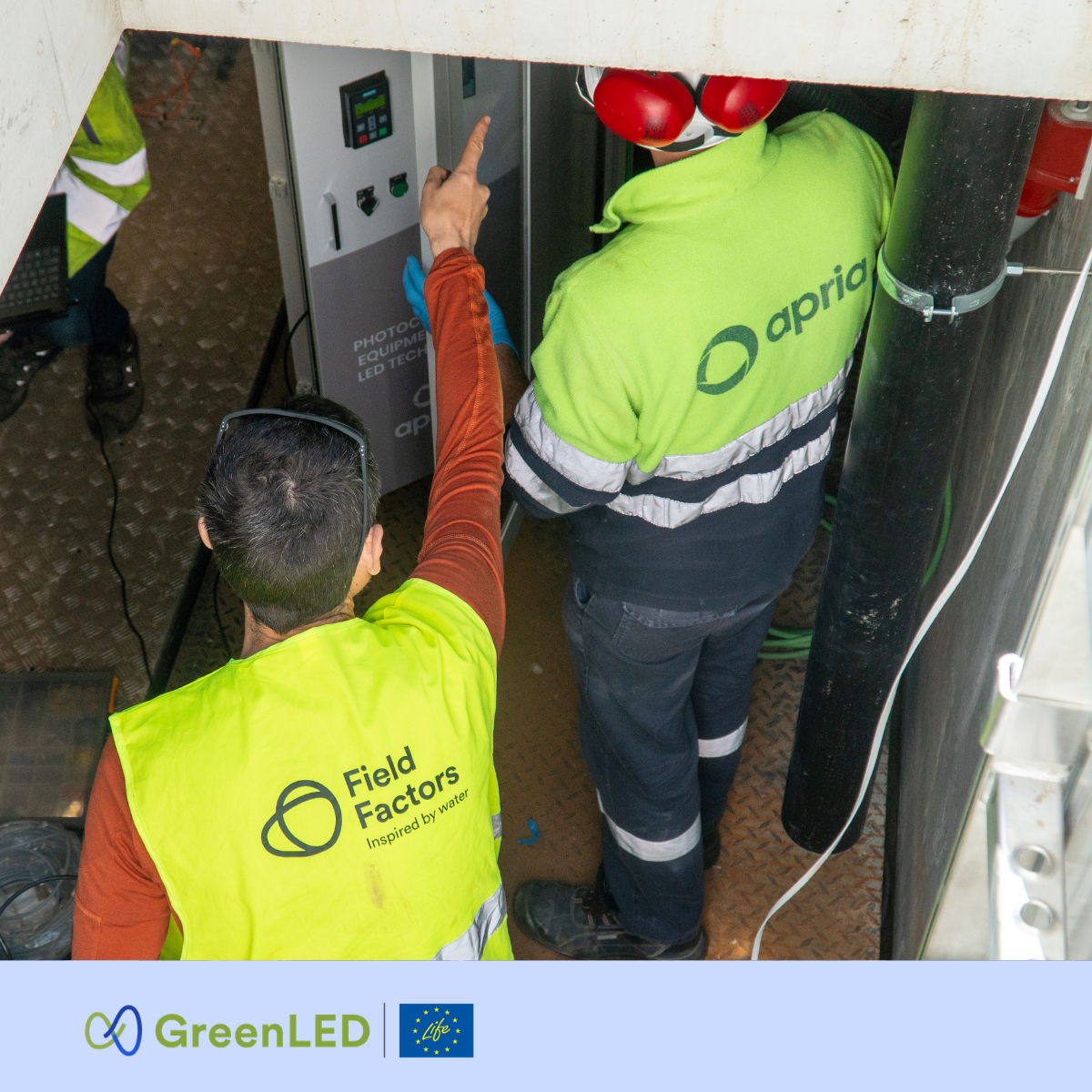
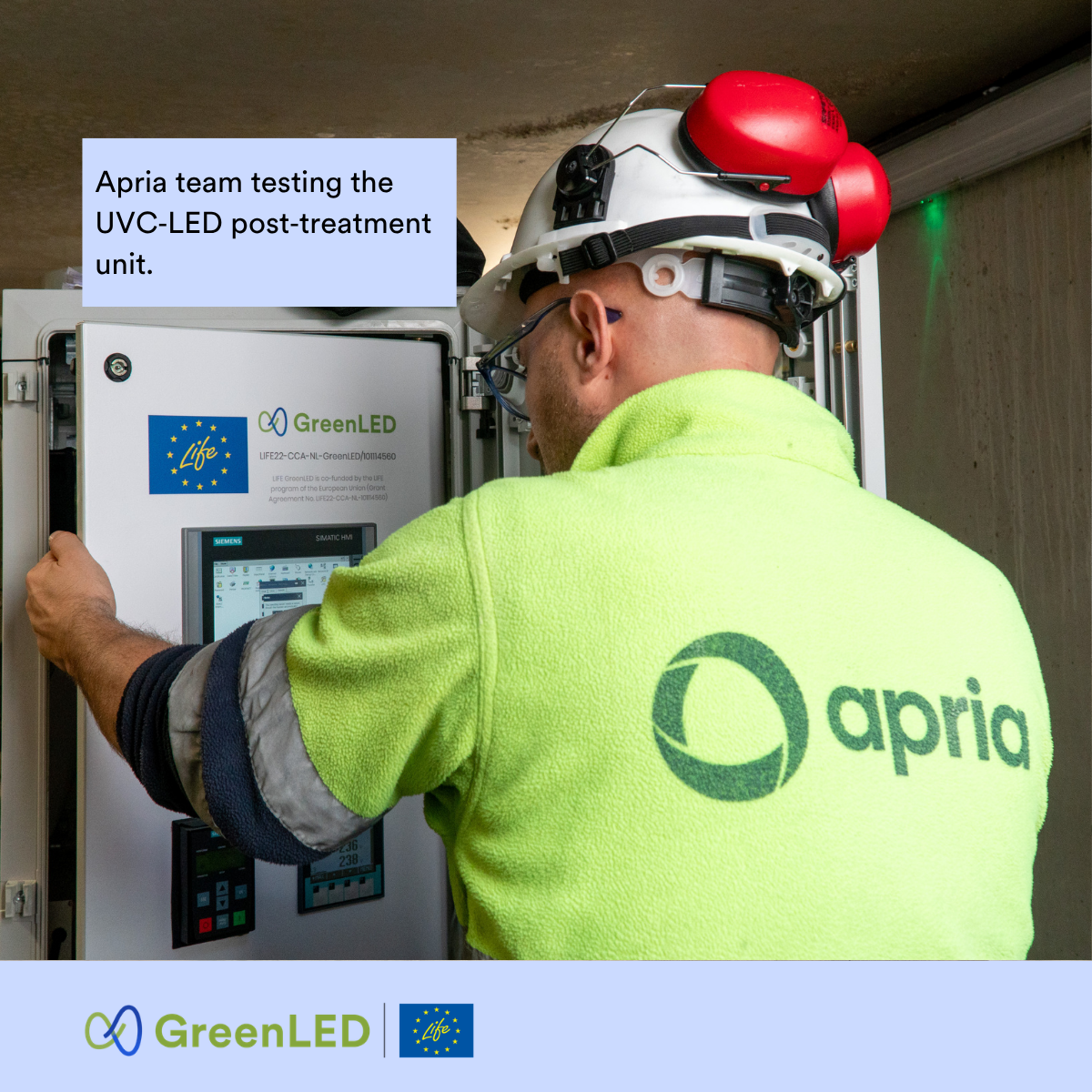
UV disinfection: Before the water reaches the irrigation system, it passes through a UV-LED unit that eliminates any remaining pathogens. Safe, chemical-free, and energy-efficient.
Irrigation delivery: Clean, locally sourced water reaches green roofs and facades across the city center throughout the summer months.
The two city center sites use the same approach, adapted to different local conditions: one captures runoff from a redeveloped street area; the other draws on surplus water from a nearby canal. Together, they show the system works in different urban water contexts.
GreenLED builds on proven BlueBloqs technology already deployed in Rotterdam (Sparta Stadium), The Hague (Cromvlietpark), and Pijnacker-Nootdorp. In these projects, the system captured over 80% of on-site rainfall, treating up to 30 million liters per year to meet Dutch water quality standards.
-
Key points: collection, retention, treatment, replenishment, monitoring
BlueBloqs creates a circular water system using five simple steps:
Five steps, fully underground, zero drinking water used:
Collection: Rainwater from streets, rooftops, and paved surfaces is captured at source, before it enters the sewer system, turning a drainage challenge into a valuable local resource.
Biofiltration treatment: The water passes through a natural biofilter, where plants and soil remove contaminants without chemicals, ensuring safe water quality.
Underground storage: Filtered water is stored underground in a purpose-built well or local aquifer. The ground itself acts as a seasonal reservoir until summer, solving space constraints in dense city areas.
Disinfection (UV-C LED): Before use, the stored water undergoes UV-C LED treatment to eliminate any remaining pathogens, providing chemical-free and energy-efficient safety.
Safe water reuse: Clean, treated water is delivered to irrigate green roofs and building facades across the city, supporting greenery, reducing urban heat, and promoting climate-resilient urban living.
Smart monitoring — BlueBloqs integrates 24/7 monitoring and smart controls that provide:
Real-time tracking of water capture, treatment, storage, and reuse
Verified water replenishment outcomes for credible reporting
Data-driven insights on system performance and project KPIs
Reliable operation ensuring consistent water replenishment
💡 Watch this video on our product page. See how BlueBloqs turns stormwater into a measurable local water resource, with a clear, step-by-step animated explanation.
-
GreenLED creates value across the city, its residents, and the regional water system.
For the City of Alphen aan den Rijn
Reduced flood risk and sewer pressure: Capturing rainwater from 31,000 m² of paved surfaces lowers peak loads on the drainage system, reducing the risk of local flooding.
Reliable green infrastructure: 50,000 m² of green roofs and facades get a consistent, local water supply, ensuring investments in urban greening survive dry summers.
Cooler city center: Healthy vegetation reduces surface temperatures, making streets more comfortable during heatwaves.
Drinking water savings: 15 million liters less potable water used annually for irrigation, protecting central water supply and reducing operational costs.
Replicable model: Designed to scale, enabling other redevelopment projects in Alphen and across Dutch cities.
For water authorities and regulators
Verified quality: Continuous monitoring by TU Delft provides independent evidence that treated rainwater meets safety standards for close-contact, non-drinking uses.
Aquifer recharge: Water is returned to the ground, supporting local groundwater levels instead of depleting them.
Evidence-based policy support: Generates data and real-world insights needed to develop regulatory frameworks for urban rainwater reuse, addressing a gap across the Netherlands and Europe.
For residents
Greener, cooler city: More vegetation means lower temperatures and more pleasant, livable city center.
No municipal cost: Continuous monitoring by TU Delft provides independent evidence that treated rainwater meets safety standards for close-contact, non-drinking uses.
Cleaner waterways: Capturing stormwater before it overflows into local waterways keeps those waterways cleaner and healthier.
-
Year: 2023 - Now: construction (2-year monitoring to 2027)
Customer: City of Alphen aan den Rijn
Partners (in NL): TU Delft, APRIA Systems, Aveco de Bondt
Funding: EU LIFE programme
Locations: Lage Zijde and Hoge Zijde, Alphen aan den Rijn city center
Water use: Irrigation of 50,000 m² of green roofs and facades
Water volume: 15 million liters/year (Alphen aan den Rijn sites)
Part of: EU LIFE GreenLED — 4-year European demonstration project (NL – ES)
Project highlights
15 million liters/yr saved
Drinking water saved annually and irrigation is supplied by locally collected and treated rainwater.
50,000 m²
Reliable irrigation for large-scale green roofs and facades, enabling a cooler, climate-resilient city center.
Proven safe water reuse
Naturally treated water, combined with UV-LED disinfection and continuous monitoring, ensures safe use in close-contact urban applications.
Innovation in action
“With GreenLED, we are enabling dense city centres to implement large-scale green infrastructure, supported by a resilient and local water source.”
— Karina Peña, Co-founder and CEO of FieldFactors“By storing rainwater underground, we are taking a step forward to save drinking water and offer the residents of Alphen a green and cool city. In this way, Alphen contributes to limiting the impact of climate change and securing the drinking water supply of the future.”
— Ron Kervezee, Programme Leader, Municipality of Alphen aan den Rijn“By combining different techniques and knowledge from two universities, we can prove that there are healthy alternatives to the use of drinking water in public spaces.”
— Luuk Rietveld, Professor of Drinking Water & Urban Water Cycle Technology, TU DelftTake the next step
Learn more about the LIFE GreenLED project.
See the full project scope, partners, and objectives on the official GreenLED website, including results as they become available.
Read the official project announcement.
The press release from July 2023 covers the full consortium, the EU funding, and the ambition behind the project.
Working on climate adaptation or water management in your city? We are happy to talk!
Reach us at GreenLED@fieldfactors.com.